In the examination of trace materials, analytical methods are restricted by the available sample amount level to be very minute. To retrieve maximum information from the trace physical evidence for accurate identification, research on systematic analytical methods have been carried out using several sophisticated analytical instruments.
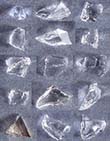
Physical substances derived from the offender, such as single fibers, glass fragments, paint fragments, plastic materials, and metals, are unconsciously left at the crime scenes. Also, those derived from the crime scene or the victim are cross-transferred to the suspect as a result of the contact between them during the conflict. This section is responsible for research on the analysis of physical evidence and related caseworks to verify the relationship between the suspect and the crime scene. Recently, trace physical evidence is recognized as being important to the criminal investigation, and a systematic system has been developed for the identification of trace physical evidence by morphological observation, spectroscopic and elemental analysis using sophisticated analytical instruments. Analytical methods to identify radioisotopes have been also studied.
Research on identification method for trace physical evidence
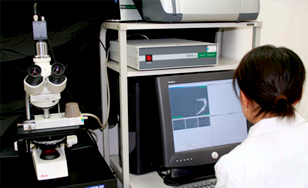
Automated melting point and refractive index measurement apparatus
This apparatus plays a significant role in the discrimination of minute glass fragments.
Research on discrimination method by comparison of trace impurity elements
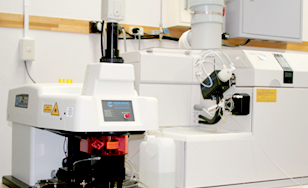
Laser ablation inductively coupled plasma mass spectrometer
This instrument enables rapid and highly sensitive elemental analyses of trace solid samples without complicated pretreatment.
Glass and metal fragments contain characteristic trace impurities derived from source materials and the manufacturing process. Research on the discrimination method for physical materials by utilizing these impurities as indices has been conducted using highly sensitive analytical instruments.
